Mara Ellison · 18 September 2026
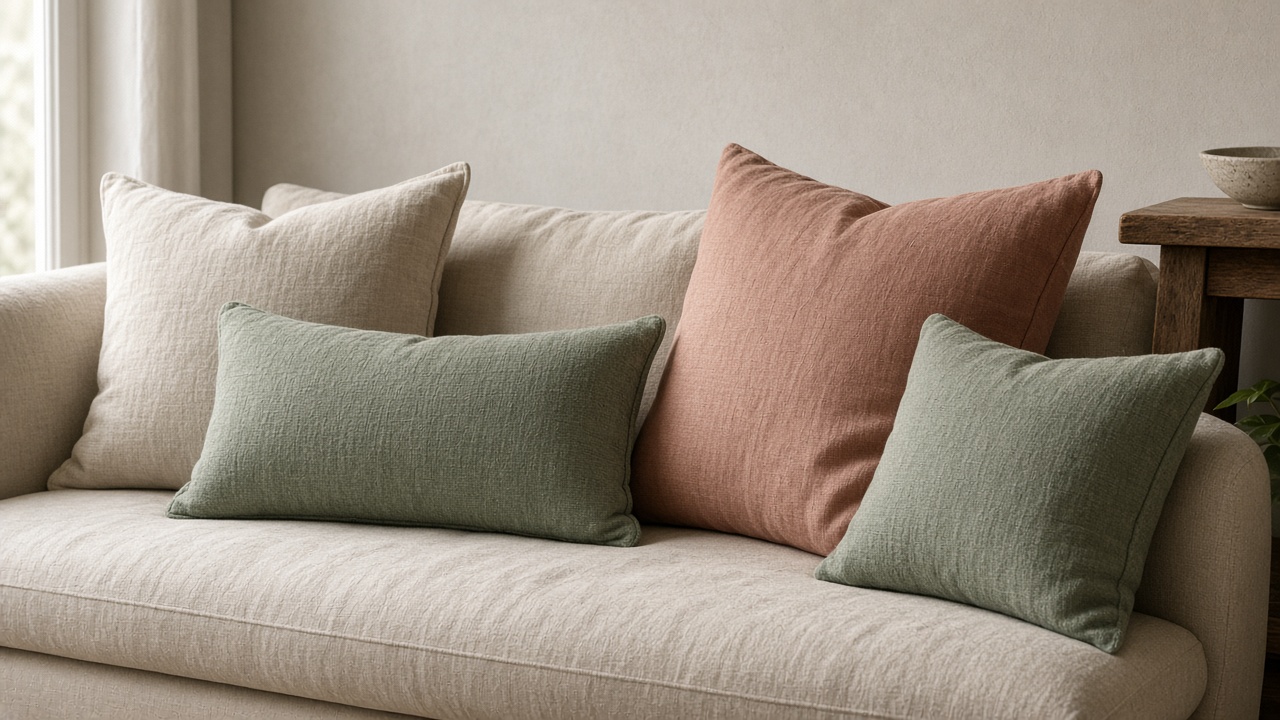
A sofa starts to look accidental when every cushion is the same square and every cover is a different idea. Layering is not a pile. It is a short sequence: something large against the back, something you actually lean on, and one smaller piece that can be moved when a guest sits down.
Start with the back, not the colour
Measure the inside of the sofa from the arm to the opposite arm, then leave a little air. Two large covers, or three if the sofa is long, should span that width without overlapping so much that they stand up like a wall. Linen that has already been washed sits lower than crisp cotton. That softness is useful at the back because it does not fight the shape of the frame.
The sunwashed linen pillow pair is the size we reach for here. The insert is dense, the cover has a hidden zipper, and the oatmeal tone is easy to repeat. Repetition is the whole trick. If the back pillows share a cloth, the front pillows can change without the seat looking like a sample board.
One colour, two textures
Pick a colour you already have in the room: the rug, the timber, the shade of a lamp. Use it twice, in two textures. A wool throw folded over one arm counts as the second texture even if you never sew another cover. The chunky throw in the textile edit is heavy enough to stay where you put it and open enough to drape instead of sitting in a brick.
Avoid a third bright accent unless the room is already very quiet. A single clay or sage cover in front of oatmeal linen is enough. More than that and the eye stops on the cushions instead of the room.
Leave a seat
If a person cannot sit without relocating four pillows, the arrangement is for a photograph. Keep the front layer to one or two cushions and make sure they have a place to go, usually the floor beside the sofa or a basket. Good covers survive that. Cheap fills collapse and never look right again, which is why the insert matters as much as the cloth.
Wash the covers before a gathering if they have been in hard sun. Linen likes water. Hang them, smooth them while damp, and they return to the same relaxed face. That is the look the layering was aiming for in the first place.